
Traffic alone will not guarantee enrolments for digital education providers. While it is great to have thousands of people visiting your course landing page, only a small number will actually become leads or students. This is where Conversion Rate Optimization (CRO) comes into play.
CRO focuses on making the user experience better, building trust with customers, providing clarity on course offerings, and persuading visitors to take action – whether that’s filling out an inquiry form, booking a demonstration or enrolling in a course.
This blog post was created by analysing the top-ranking CRO blogs and landing page optimization techniques available on Google and taking the best of each to create one simple, actionable, search engine optimized (SEO) and geo-targeted guide that can benefit educational institutions, academies, ed-tech brands, and training providers.
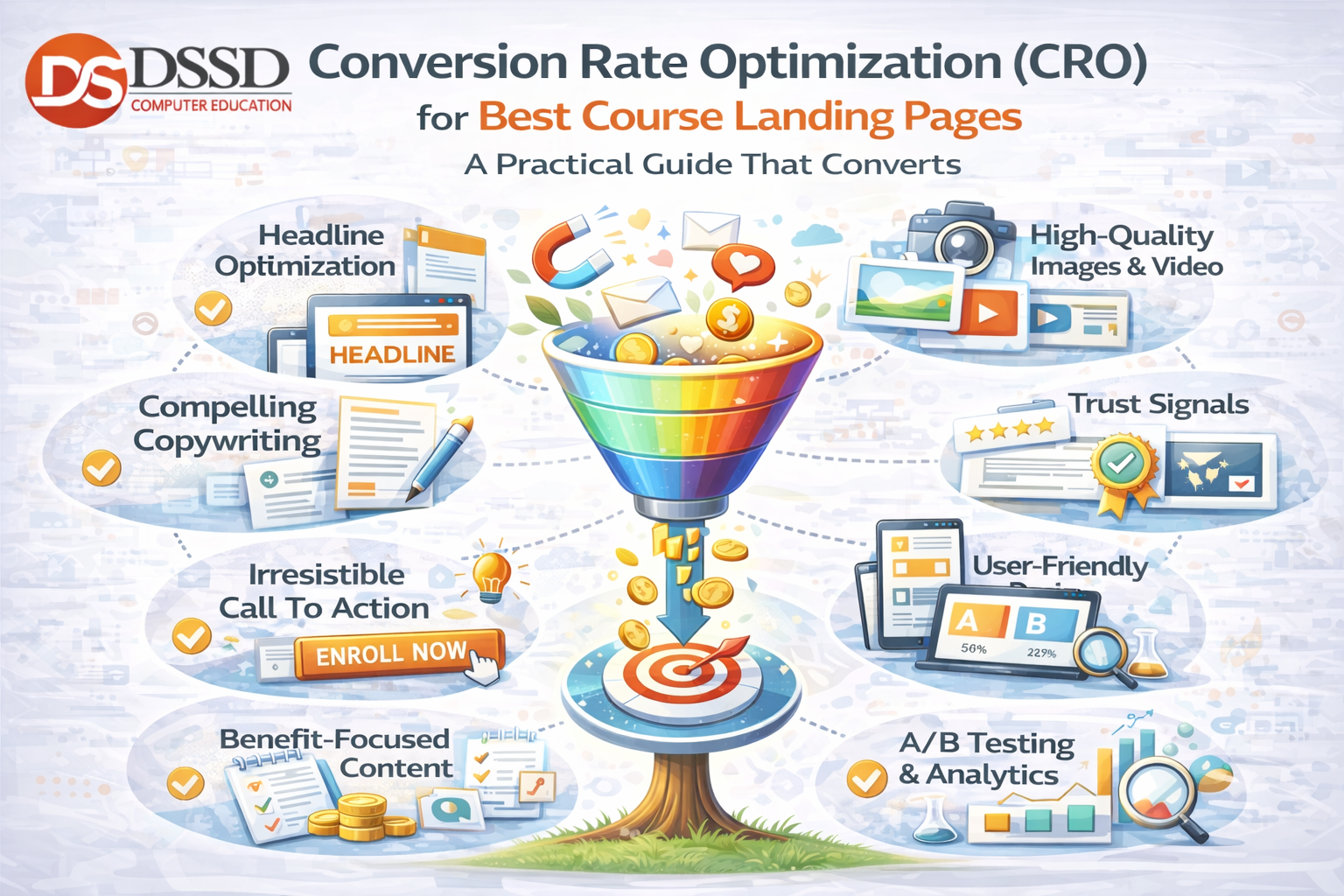
The Real Problem: High Traffic but Low Conversions
Most course providers face the same dilemma:–
- They see an increase in traffic to their website
- Ads for your courses are running correctly
- SEO rankings for their courses are increases
- However, the number of course purchasers remains very low
The main reason is that the landing page hasn’t been fully optimized to help the user make a course purchasing decision. Most visitors make their decision in 5–8 seconds about whether they will continue to browse or leave. If your course landing page doesn’t do an excellent job of communicating the value of your courses, establishing a sense of trust, and providing clear action steps for users to take, the user will leave the website without purchasing your course. Conversion Rate Optimization (CRO)provides a solution to this issue.
Understanding Conversion Rate Optimization (CRO) for Best Course Landing Pages
The process of Conversion Rate Optimization (CRO) is taking a landing page and altering certain elements to increase the percentage of users who perform a desired action.
Conversion Rate Optimization for a course landing page consists of:
- A clear communication of course value
- Calls to Action placed prominently
- Trust signals and credibility
- A simple navigation experience and a streamlined form design
- An understanding of user psychology and behaviour
CRO is not a guessing game, it is determined by data, focused on users, and constantly improved.
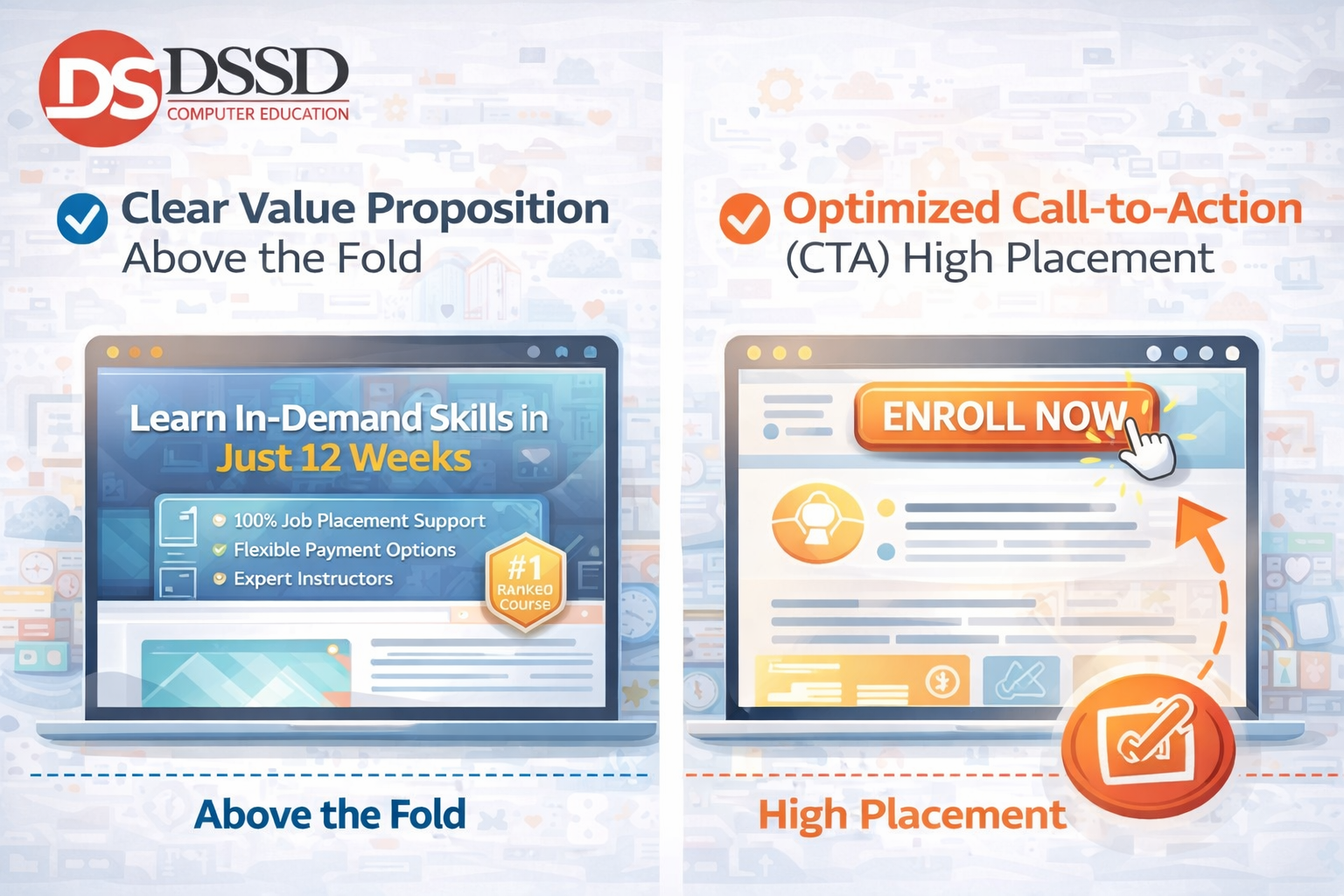
Step 1: Clear Value Proposition Above the Fold
Among the different components of a course’s conversion rate optimization, the most important is the area located above the fold (the viewport area).
A website that is developed for conversion should clearly communicate three basic elements:
- The Course Content
- The Target Audience for the Course
- The Expected Result For the Student
- Trust in the Educational Institution
It is essential that a website has:
A Clear Headline, A Benefit Driven Subheading and An Eye-Catching Call To Action
The probability of obtaining a conversion increases dramatically once potential learners recognize the value proposition.
Step 2: Optimized Call-to-Action (CTA) High Placement
CTAs help drive conversions by giving users the direction to convert.
As effective CRO Strategies develop:–
- Primary CTA should appear above the fold
- Key sections should have repeated CTAs
Use action-oriented language for CTAs such as “Enrol Now”, “Book Free Demo” and “Download Course Brochure”.
- CTA buttons need to
- Have visual differentiation
- Be clickable
- Clearly indicate the next step
Avoid using generic CTAs like “Submit” or “Click Here”.
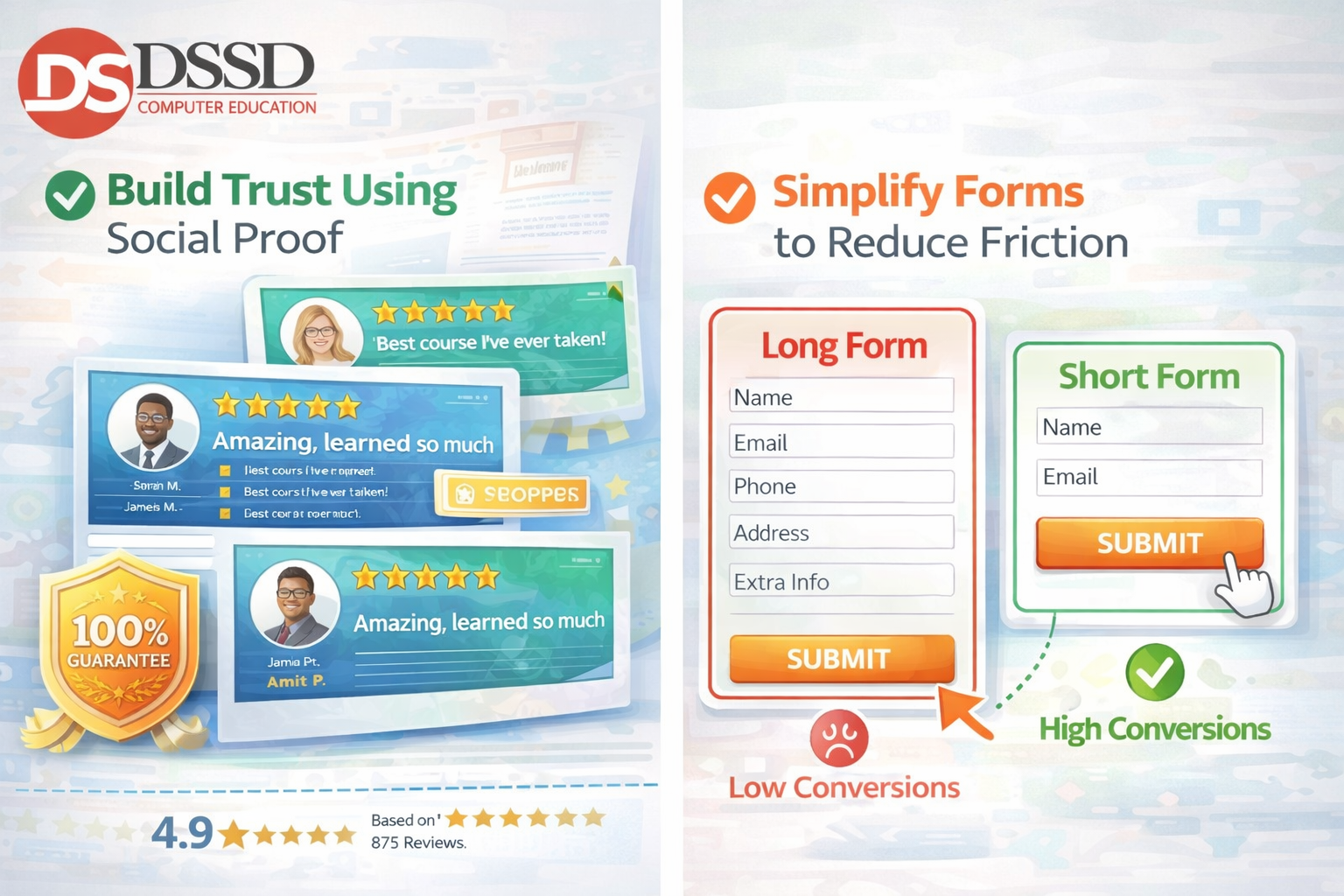
Step 3: Build Trust Using Social Proof
The trust between both parties heavily influences student enrolment numbers.
High conversion-specific landing pages consist of:–
- Student Testimonials
- Placement Success Stories
- Alumni Reviews
- Company Logos/Hiring Partners
- Ratings/Reviews
Having visitors see authentic student results, lessens any fears and increases the likelihood that the visitor will take advantage of the offer.
Trust is particularly a consideration when targeting India-based and local GEOs.
Step 4: Simplify Forms to Reduce Friction
Long, complicated forms can discourage conversions.
The best practices in CRO for forms on a landing page for courses include:
1. Collect only the information that is necessary
2. Minimize the number of fields on your form
3. Clearly label each field on your form
4. Make your form mobile-friendly
The simpler you make your forms, the more likely people will convert.
Step 5: Improve Page Speed & Mobile Experience
If the landing page doesn’t load quickly, more users will leave the site instead of purchasing a product or service.
Conversion Rate Optimization is based on:
- A fast page load time.
- A layout that is mobile-responsive.
- An easy-to-follow navigation structure.
- An obvious visual order of information.
Due to the number of mobile users, it has a major impact on sales and conversions.
● Step 6: Content Structure That Guides Decisions
The structure of a Conversion Rate Optimization Course Landing Page is based on how users think, what they scroll through, and how they make a decision:
- Awareness of the problem
- Solution (the online course) to the problem
- Results from consuming course
- What is in the course
- Social Proof of course functionality
- Call to Action (CTA)
Rather than inundate users with information, lead them through the conversion process in a structured manner.
Step 7: Use Data & Analytics for Continuous Improvement
CRO is an ongoing process that requires continuous testing and learning, not just performing tests and learning from results.
Use analytical tools to understand how your users engage with your site such as:
- Google Analytics
- Heatmaps
- Session Recordings
- A/B Testing Tools
Once you use these tools, you’ll gain insight on:
- Where users leave your website
- The most effective sections of your website
- The highest converting CTAs
Ongoing improvements create large increases in conversions over time.
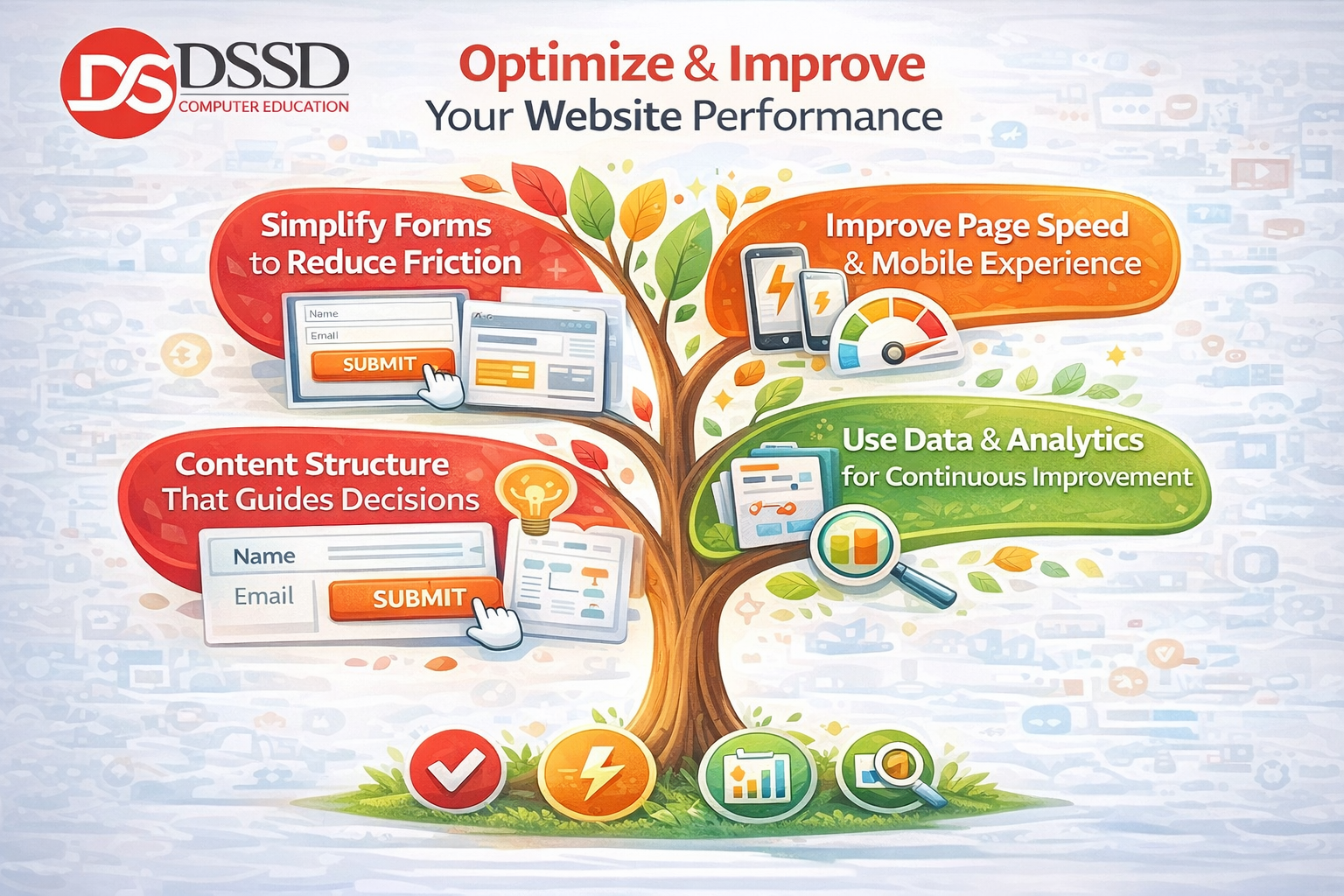
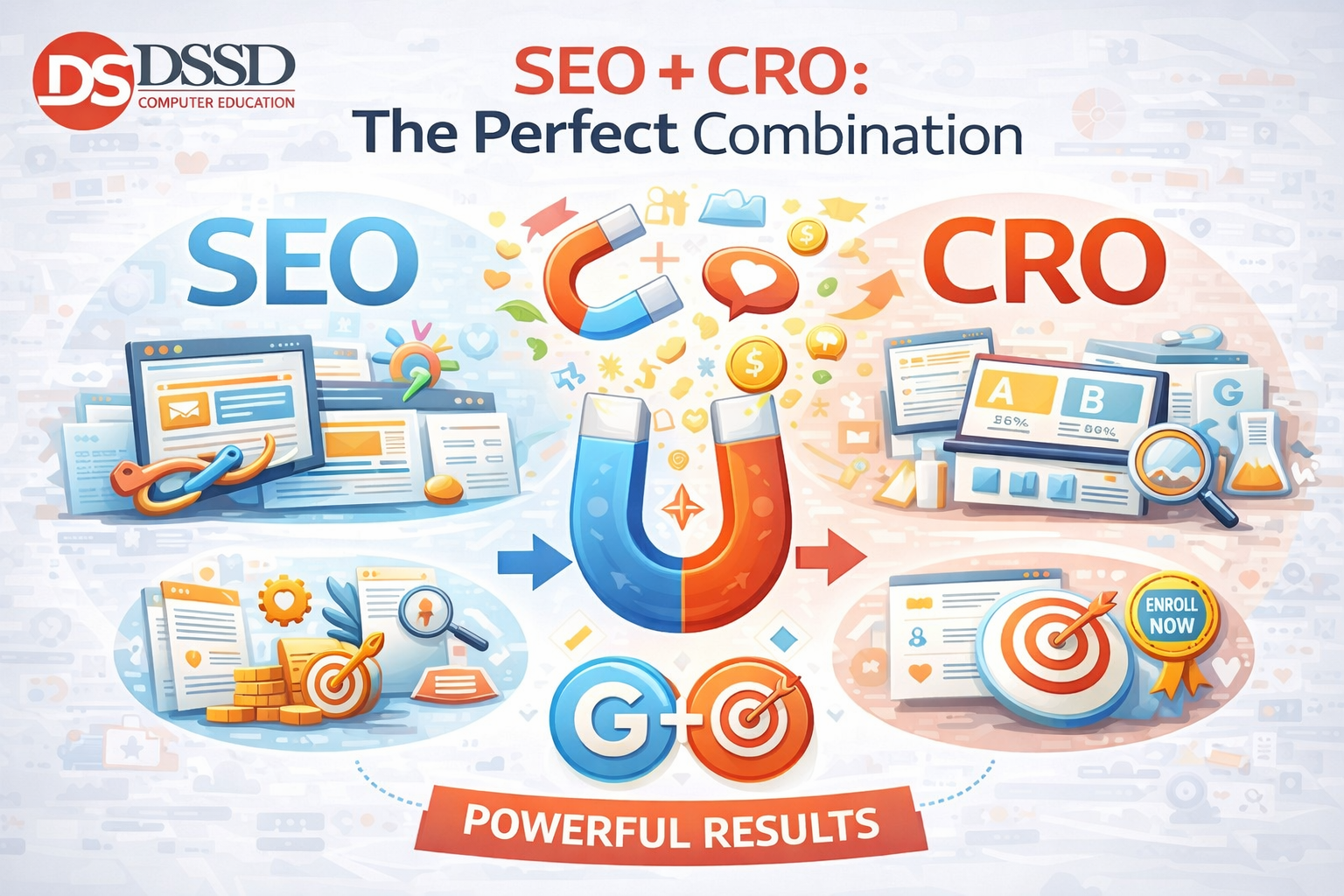
SEO + CRO: The Perfect Combination
Combining Conversion Rate Optimization (CRO) and SEO should be the focus of a Landing Page Design rather than one or the other as both are equally important.
A Landing page should include the following best practices:
- Headings optimized for Keywords
- Keyword Placement within Text Naturally
- Keywords for location specific Geo Ranking
- User Friendly Content
Combining CRO and SEO allows for both Higher Rankings and Higher Conversion Rate Optimization on your Landing Pages.
Common CRO Mistakes to Avoid
- Too much text without clarity
- Weak or hidden CTAs
- No social proof
- Slow page speed
- Ignoring mobile users
Avoiding these mistakes alone can significantly improve conversion rate
Why CRO Is Essential for Course Providers in 2026
In the face of escalating rivalry in the educational sector, organisations need to invest in CRO, or Conversion Rate Optimization, if they want to leverage every opportunity to covert potential students.
Conversely, schools and universities which incorporate CRO into their business strategies; allow for maximised usage of the traffic sending them students, generate savings on advertising costs, optimally maximise their return on investment, develop brand credibility, and ultimately achieve increased enrolment within a long-term perspective.
Conclusion
Course landing page conversion rate optimization (CRO) focuses on transforming potential customers’ interest in a course into actions through better clarity, trust, structure and user experience of the Course Landing Pages. CRO uses psychology, data, and design to facilitate the user’s confident decision-making process towards enrolment in a course and, when aligned with SEO and GEO strategies, can become an important growth driver for course providers who operate in a highly competitive education environment.
FAQs – Conversion Rate Optimization (CRO) for Course Landing Pages
1. What exactly do we mean by “conversion rate optimization” (CRO) as it pertains to course landing pages?
CRO refers to the process of improving course landing pages so that visitors have a higher likelihood of taking specific actions such as filling out forms, booking demos, or enrolling; however, it does not require increasing web traffic.
2. Why do we need CRO for online courses?
By increasing the conversion rates of existing web visitors into leads/students, improving return on investment (ROI), and decreasing dependence on paid advertising.
3. What elements of course landing pages are most likely to lead to conversions?
The most significant factors that contribute to increased conversion rates on course landing pages include clear headlines; clear and compelling calls-to-action (CTAs); social proof; simple forms; fast loading speeds; and mobile-friendly designs.
4. Will CRO eventually impact SEO and Google Rankings?
Yes, CRO contributes to improved user experiences, a lower bounce rate, and a higher engagement level among website visitors, thereby indirectly supporting an increase in SEO ranking and a greater presence in GEO-based searches.
5. How frequently should CRO be reviewed and/or improved?
Optimizing for CRO should be considered an ongoing effort using analytics, user behavioural data, and regular testing to continually improve course landing pages.
6. How long does it take to see CRO results?
While short-term gains are noticeable after a few weeks, long-term and scalable conversion growth is the result of constant testing and optimization.
7. Can novice course developers use CRO?
Yes, even minor adjustments like better headlines or CTAs can greatly increase conversion rates, making CRO very effective for novices.
8. What CRO tools are employed on landing pages?
Google Analytics, Google Optimize substitutes, Hotjar, Crazy Egg, VWO, and A/B testing platforms are examples of popular CRO tools.
9. Can cost per lead (CPL) be decreased with CRO?
Indeed, CRO increases conversion efficiency, which in turn reduces cost per lead and optimizes return on investment from sponsored advertisements.
10. On course landing pages, what is the most significant CRO error?
Ignoring user intent, trust signals, and clear messaging in favor of design is the biggest error.