
If you want to succeed in the world of online business, taking an E-commerce Marketing course in Delhi can be a game-changer. In today’s competitive digital world, E-commerce Marketing isn’t just important—it’s essential. Every channel, whether it’s selling on Amazon, running a Shopify store, or using paid ads, plays a unique role in helping your business grow. In this guide, we’ll walk you through Amazon marketing, Shopify strategies, and paid ads, and compare them so you can choose what works best for you.
What is E-commerce Marketing Marketing?
Simply put, E-commerce Marketing is about using online tools and strategies to promote products and services. The main goal of an E-commerce Marketing course in Delhi is to teach students how to attract potential customers, turn them into buyers, and keep them coming back.
Think of it like this: just having a product isn’t enough. You need the right strategies to get noticed, stand out, and convert visitors into happy customers.
Some of the most common channels include:
- Marketplaces like Amazon and Flipkart
- Online stores built on platforms like Shopify
- Social media platforms like Instagram, Facebook, and LinkedIn
- Search engines and paid ads
Students in an E-commerce Marketing course in Delhi get hands-on experience with all of these, learning exactly how to drive traffic, increase sales, and grow a sustainable online business.
Amazon E-commerce Marketing
Amazon is one of the largest online marketplaces in the world. It gives sellers instant access to millions of potential customers. In an E-commerce Marketing course in Delhi, you’ll learn how to make your products more visible on Amazon through:
- Keyword-rich product listings
- High-quality images and videos
- Clear, engaging product descriptions
- Positive customer reviews
Plus, Amazon offers Sponsored Products and Sponsored Brands campaigns. These are paid ads that boost visibility fast. Students learn how these ads work and how to use them to increase sales quickly and build trust with customers.
Shopify E-commerce Marketing
Shopify allows businesses to create their own online stores. Unlike Amazon, you have full control over your branding, pricing, and customer data. An E-commerce Marketing course in Delhi teaches students how to attract visitors to their Shopify stores using:
- SEO strategies for product pages and blogs
- Social media and email marketing
- Content marketing to engage audiences
- Collaborations with influencers
The focus here is on building a brand that lasts and maintaining strong relationships with your customers. With the right strategies, your Shopify store can become a long-term business asset.
Role of Paid Ads in E-commerce Marketing
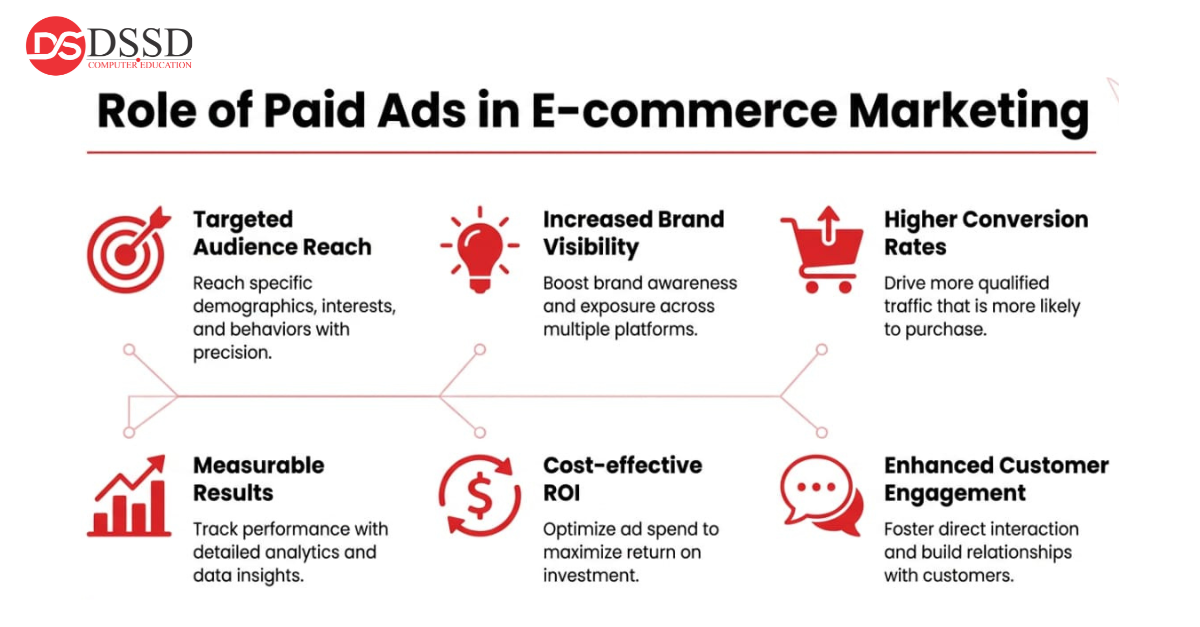
Paid ads are one of the fastest ways to get traffic and sales for your online business. Platforms like Google Ads, Facebook Ads, and Instagram Ads let you reach the right people based on:
- Their interests and online behavior
- Age, location, and demographics
- What they’re searching for or browsing
- Complete Guide to E-commerce Marketing
In an E-commerce Marketing course in Delhi, students learn how to use paid ads for things like:
- Launching new products and creating excitement
- Running seasonal promotions and offers
- Retargeting visitors who didn’t buy the first time
- Scaling sales quickly without guesswork
Paid ads aren’t just spending money—they’re about getting measurable results fast, making them a must-have tool for any E-commerce Marketing strategy.
Comparison: Amazon vs Shopify vs Paid Ads

Each platform has its own strengths, and knowing how to combine them is key:
| Platform | Strengths | Challenges |
| Amazon | Quick sales, large audience, trusted marketplace | Limited branding, high competition |
| Shopify | Full brand control, direct customer relationships | Needs consistent marketing |
| Paid Ads | Targeted traffic, fast conversions, scalable | Requires budget and strategy |
An E-commerce Marketing course in Delhi teaches students how to blend these channels perfectly—so they can reach more people, make more sales, and retain loyal customers.
Which E-commerce Marketing Strategy is Best?
The most effective E-commerce Marketing strategy uses a combination of all three:
- Amazon → for marketplace sales and instant exposure
- Shopify → for building a strong, memorable brand
- Paid Ads → to drive traffic and boost conversions
Students in an E-commerce Marketing course in Delhi learn how to merge these strategies, creating sustainable growth and higher ROI.
Types of E-Commerce
To be effective at E-commerce Marketing, you need to know the many forms of e-commerce. E-commerce is the act of buying and selling goods and services over the Internet. It can be put into groups based on the type of transaction and the people involved:
1. Business to Consumer (B2C)
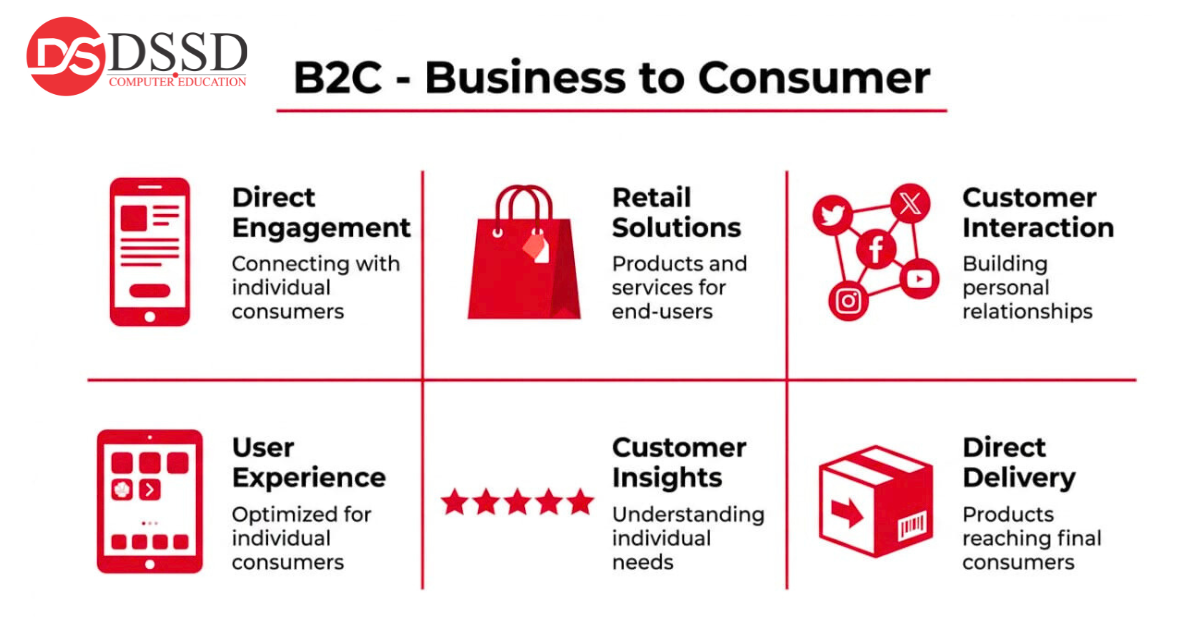
Selling products directly to individual customers. Focus on pricing, promotions, fast delivery, and amazing customer experience.
2. Business to Business (B2B)
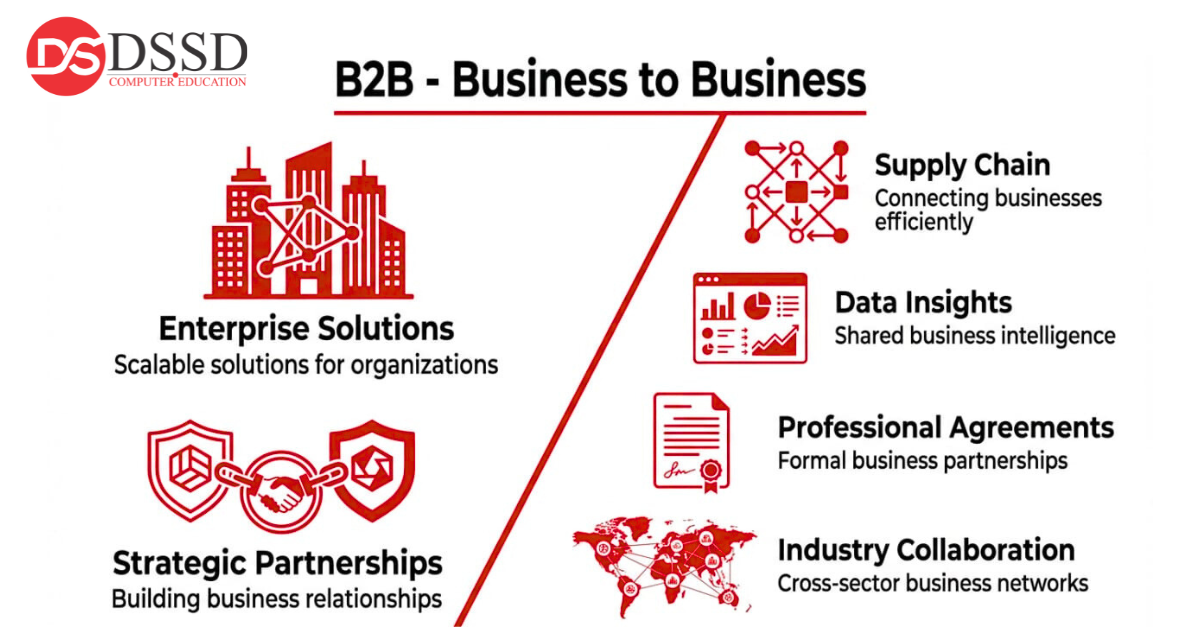
Businesses selling to other businesses, often in bulk. Focus on building relationships, offering bulk pricing, and customized solutions.
3. Consumer to Consumer (C2C)
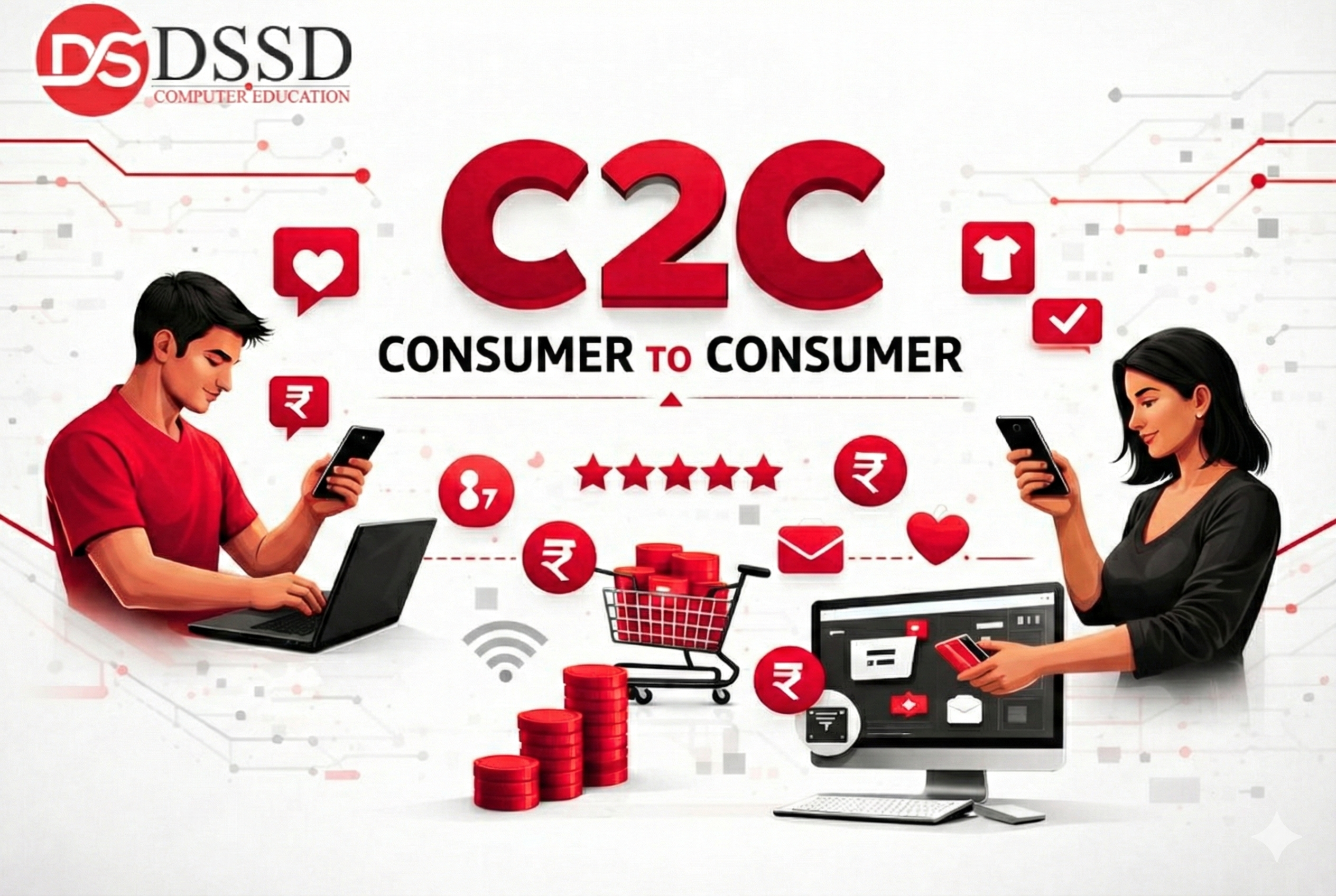
Individuals selling to other individuals through marketplaces. Focus on trust, visibility, and smooth transactions.
4. Consumer to Business (C2B)
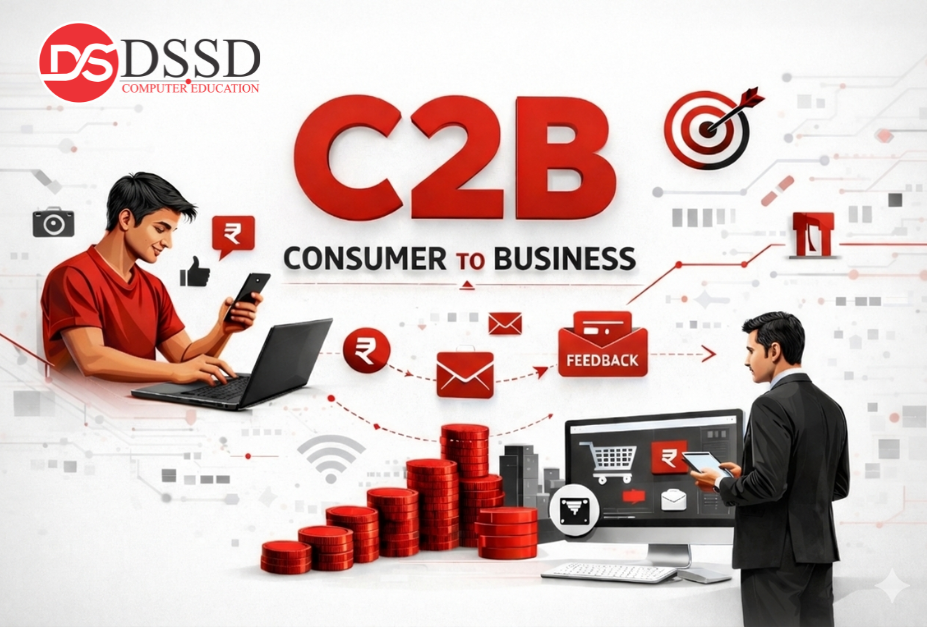
Individuals offering products or services to businesses—like freelancing, influencer campaigns, or content creation. Focus on monetizing skills and providing value.
5. Direct to Consumer (D2C)
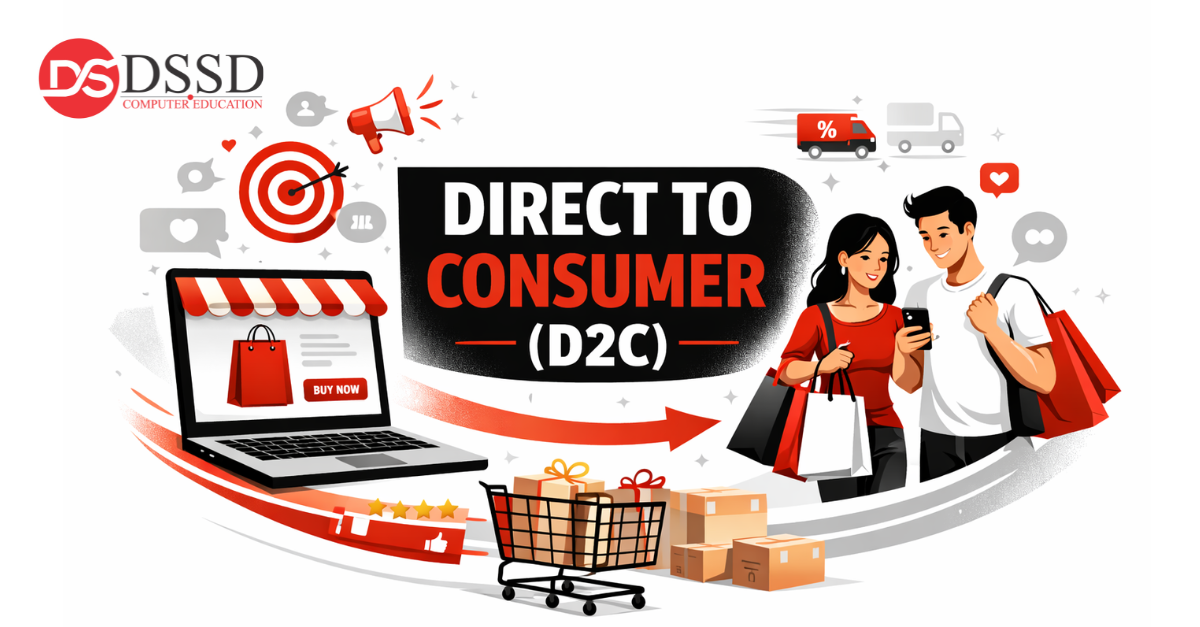
Direct to Consumer (D2C) e-commerce allows brands to sell directly to customers without intermediaries. D2C E-commerce Marketing helps brands control pricing, branding, and customer data, making it ideal for startups and online-first brands.
6. Business to Government (B2G)
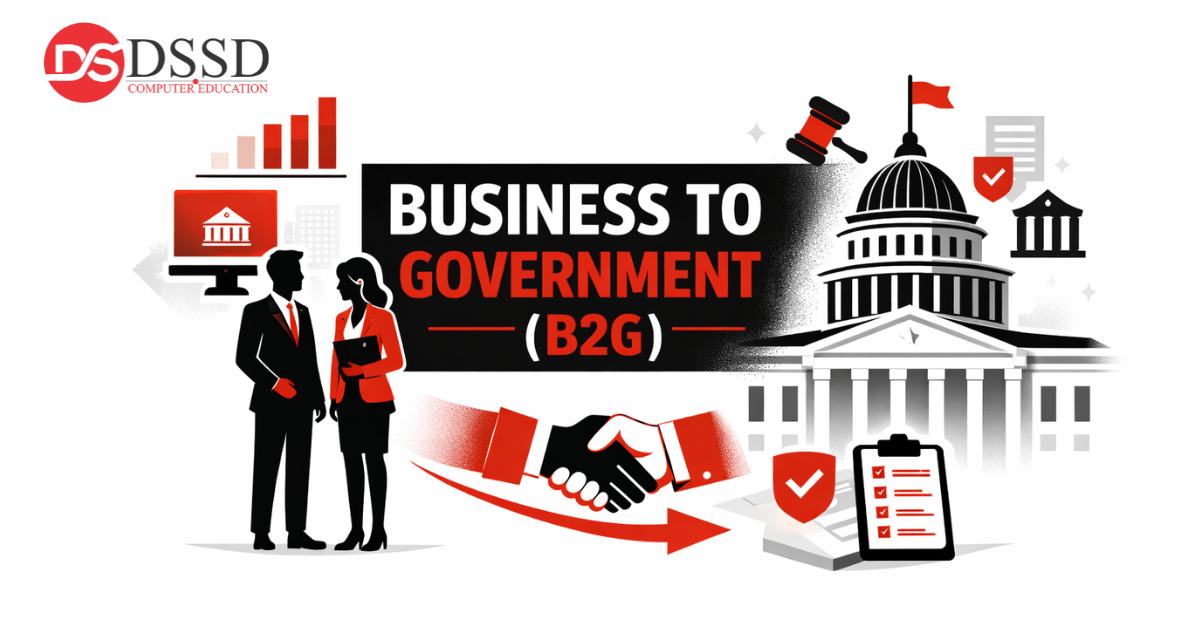
Business to Government (B2G) e-commerce involves transactions between businesses and government organizations. B2G E-commerce Marketing focuses on compliance, documentation, and large-scale service delivery through official portals and tenders.
Conclusion
E-commerce has changed how businesses work by giving them different models to choose from, like B2C, B2B, C2C, D2C, and C2B, each of which is designed for a different audience and set of goals. Picking the right kind of e-commerce is just the first step, though. Businesses need to use good E-commerce Marketing strategies to support the model they choose if they want to be successful in the long term.
Amazon and other platforms give businesses quick access to a large number of customers. Shopify lets businesses build and grow their own brand. Paid advertising helps all types of e-commerce get targeted traffic and make sales faster. When used together in the right way, these channels make a strong ecosystem for growth online.
Businesses can get the most out of e-commerce by knowing the different types and the best way to market them. This will help them get more customers, make more sales, and build long-term relationships with their customers. In today’s digital-first economy, it’s important to know how to use e-commerce models, Amazon marketing, Shopify optimization, and paid ads to build a successful and scalable online business.
Frequently Asked Questions (FAQs)
1. What is E-commerce Marketing?
E-commerce Marketing is the process of promoting online stores and products using digital channels like SEO, paid ads, social media marketing, email marketing, and influencer campaigns to increase sales.
2. Why is E-commerce Marketing important for online businesses?
With quantifiable outcomes, e-commerce marketing assists online companies in drawing in targeted traffic, enhancing brand awareness, and turning visitors into paying clients.
3. What are the key strategies used in E-commerce Marketing?
Search engine optimisation (SEO), Google Shopping Ads, social media advertising, email automation, content marketing, and conversion rate optimisation are the primary e-commerce marketing tactics.
4. How does E-commerce Marketing increase online sales?
E-commerce Marketing increases sales by targeting the right audience, improving product visibility, retargeting interested users, and optimizing the buying journey.
5. Which platforms are best for E-commerce Marketing?
Top platforms for E-commerce Marketing include Google Ads, Facebook and Instagram Ads, Amazon marketing, YouTube ads, and email marketing tools.
6. Is E-commerce Marketing suitable for small businesses?
Yes, E-commerce Marketing is highly effective for small businesses because it allows budget control, performance tracking, and scalable growth.
7. What knowledge and abilities are necessary to learn e-commerce marketing?
To learn E-commerce Marketing, you need skills in SEO, paid advertising, analytics, content creation, audience targeting, and conversion optimization.
8. How long does it take to see results from E-commerce Marketing?
Paid campaigns can show quick results within days, while organic E-commerce Marketing strategies like SEO take a few weeks to months for long-term growth.
9. What is the biggest challenge in E-commerce Marketing?
The biggest challenge in E-commerce Marketing is managing competition, ad costs, and conversion optimization while maintaining profitability.
10. Can E-commerce Marketing help increase brand loyalty?
Yes, E-commerce Marketing builds brand loyalty through personalized email campaigns, remarketing ads, and consistent customer engagement.